Protected Structures & Period Homes: A Cost-Control Guide for Irish Renovations

The "Money Pit" Fear vs. The QS Reality
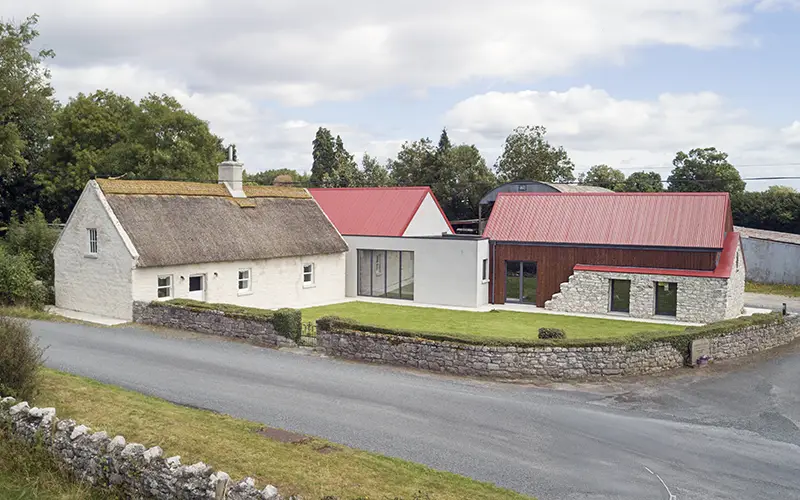
In the Irish property market, few things are as romantic as a Victorian terrace in Dublin 6, or a storybook Irish stone cottage renovation. But for many, the dream ends where the budget begins. The fear of the "money pit" - where €1 becomes €1,000 in the blink of an eye - is real.
However, financial runaway isn't inevitable. It usually happens when standard "new build" thinking is applied to restoration projects. As a Quantity Surveyor (QS) experienced in heritage, our role isn't just counting bricks; it's about forensic risk management. Here is how we control costs when the building itself is a protected structure.
Why Protected Buildings are Financially "Different"
Renovating a Protected Structure (under the Planning and Development Act 2000) is not standard construction. You are not just dealing with a builder; you are dealing with history, legislation, and "unknowns."
The Compliance Premium: Unlike a standard extension, you often cannot just "rip and replace." You may be bound by a Section 57 Declaration which dictates what you can and cannot touch. A QS ensures your budget accounts for the methods required by the Conservation Officer (e.g., lime plastering vs. standard gypsum skimming), which can vary significantly in labour costs.
The "Unknowns" Multiplier: In a 1970s semi-d, we know what's behind the wall. In an 1850s lodge, it could be rubble fill, a structural timber lintel that has turned to dust, or a blocked-up fireplace.

The "Opening-Up" Phase: Spending to Save
The biggest mistake clients make is signing a main building contract before they know the building's secrets.
We may advise a separate, smaller "Opening-Up Contract" first. This involves stripping back localised areas (lift floorboards, remove sections of damp plaster) to expose the structure.
The QS Value: Instead of a builder guessing a price (and adding a huge risk premium), we pay for investigative work. If we find sound joists, we save thousands. If we find rot, we price the repair accurately before the main contract starts. This kills the "surprise" variation costs later.
Common "Surprises" & How We Cost Them
When budgeting for Irish period homes, we don't just use a standard €/sq. ft. We explicitly price the "Big Four" risks:
Dry Rot: The silent budget killer. It travels through masonry. We budget not just for timber replacement, but for the "sterilisation" zone (stripping plaster 1m past the last sign of outbreak).
Structural Timber Issues: "Soft" rafter feet or decayed wall plates. We cost for "splice repairs" (keeping the good timber, replacing the bad) rather than total roof replacement.
Breathability (Damp): Period homes need to breathe. Using standard modern insulation can cause interstitial condensation. We budget for breathable solutions like wood fibre or cork-lime renders, which are more expensive materially but save the structure long-term.
Services Upgrades: Old homes rarely comply with modern ETCI rules. We almost always budget for a complete rewire and replumb, often requiring surface-mounted trunking or careful routing to avoid damaging cornices.

The QS Superpower: Option Pricing & Contingency
A builder will give you one price. A QS gives you options.
1 .Option Pricing (The "Slate" Example)
Scenario: Your roof is leaking.
Builder approach: "Strip it and put on new artificial slates." (Often not allowed on protected structures).
QS Approach: We price three scenarios:
A: Full replacement with new natural slate (High Cost)
B: Salvage existing slates (often 40-50% are reusable), buy reclaimed matching slates for the balance. (Medium Cost + Conservation Best Practice)
C: Turnerising (a repair sealant - generally a short-term fix we advise against, but costed for comparison).
2. Intelligent Contingency
On a new build, a 5% contingency is fine. On a protected structure, I structure the contingency differently. We might hold a 10/15% contingency, but it is "draw-down" money. It sits in the client's account, not the builder's contract. If the roof timbers are fine, that money stays with you. It is not profit for the contractor; it is an insurance policy for the project.
Reuse vs. Replace: The Financial Tipping Point
Conservation principles say "repair rather than replace." Surprisingly, this often aligns with cost control if managed well.
Example: Sash Windows.
Replacement Cost: Hand-made timber sash windows can cost €2k-€4k each.
Restoration Cost: Draft-proofing, re-cording, and splicing in new timber pieces might cost €800-€1,200 per window.
Result: Restoration saves money and retains the character (and value) of the house.
Practical Checklist: Before You Start
Do not sign a building contract until you have these:
[ ] Section 57 Declaration: Get this from your Local Authority (it clarifies what works don't need planning permission).
[ ] Condition Survey: Not a valuation survey. A detailed defect analysis.
[ ] Specialist Reports: If there is a hint of rot or beetle, get a timber specialist report now, not when the floor is up.
[ ] The "Vacant Property Grant" Check: If the home has been empty for 2 years, you may be eligible for up to €50k (or €70k if derelict). This changes the budget viability entirely.
[ ] A Priced Schedule of Works: A detailed document listing every handle, hinge, and slate. This is your bible to prevent "creep."
_________________________________________________________________________________
Next Step Are you eyeing a period property or about to sign a contract on a protected structure? Don't fly blind.
Book a Feasibility / Initial Cost Review with us. We will look at your survey, apply current Irish restoration rates, and give you a realistic "Probable Cost" range before you commit to the build.


Comments